
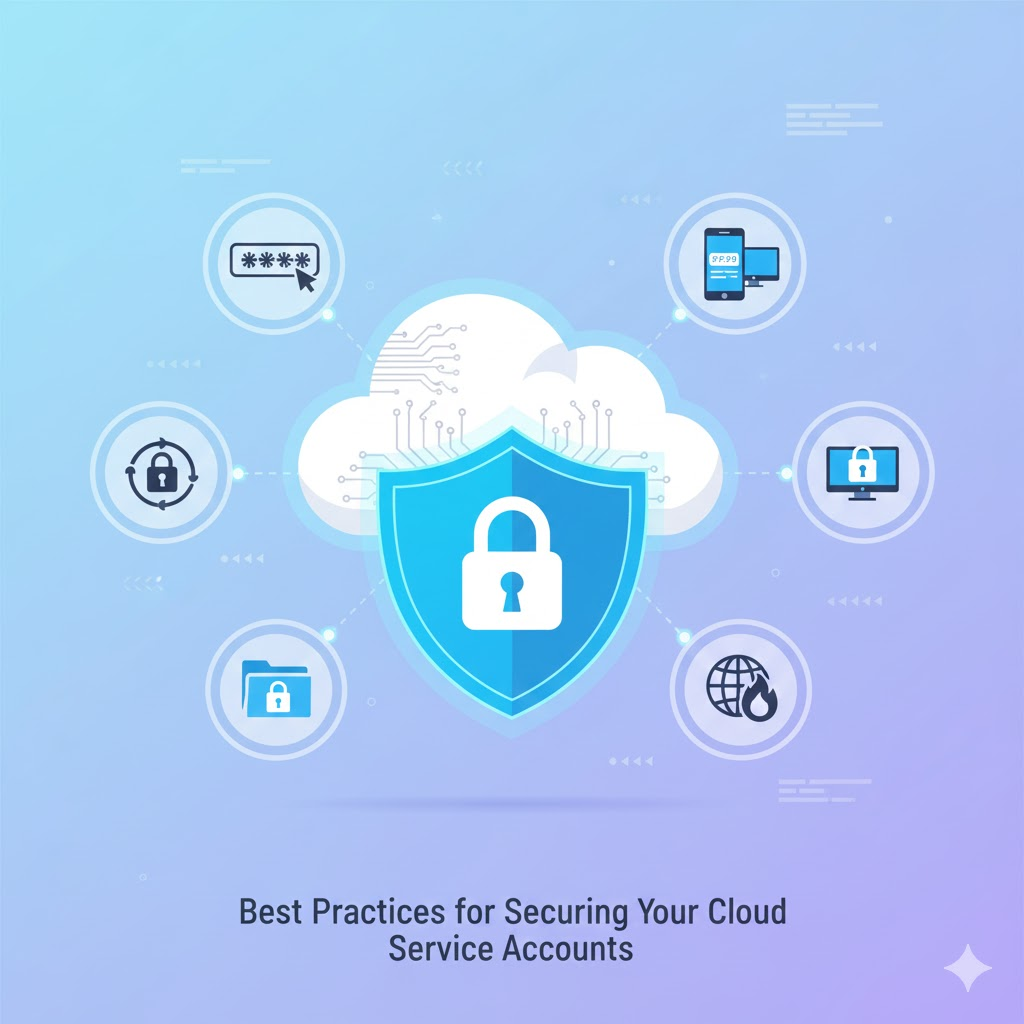
7 Steps to Secure Cloud Services Accounts Now?
Cloud services have been a critical component of business in the modern day digital world. They are flexible, store and make accessible very powerful tools that can propel productivity and collaboration. As much as these benefits are realized, there are serious security concerns. Considering that the migration of businesses to cloud is increasing, knowing how to secure your cloud services accounts is of the essence. This paper discusses best practices that can be adopted to make sure that your cloud environment is secure and undamaged to possible threats.
Realizing the value of Cloud Security
Cloud security is the act of defending the information, software and services present on the cloud. Due to the development of cyber threats, cloud services accounts security is no longer a choice, it is a must. The breach of data may result in financial loss, reputation, and lawsuits. Thus, strong security is very important in order to protect your sensitive data.
The Risks Involved
The cloud has many advantages, but unauthorized access, data losses and compliance are also among the threats. Cloud accounts are common targets of cyber criminals due to their access to large volumes of data. These risks can be mitigated by understanding them so that you can be proactive.
Best Practices: How to Secure Your Cloud Services Accounts
1. Use Strong, Unique Passwords
By using strong and unique passwords, one of the easiest and yet most effective methods of securing your cloud accounts is achieved. It is better to avoid common phrases and ensure that your passwords contain the combination of lower and upper case letters, numbers, and special characters. A good password is the initial one that will start off the series of defense against unauthorized access.
The use of a password manager to generate and keep complicated passwords can be considered. This tool may assist you to make different passwords to each of your accounts which will minimize the chance of reusing a password.
2. Turn On Two-Factor Authentication (2FA)
Two-factor authentication provides an additional security measure to the cloud accounts. In 2FA mode, you will be required to present two types of authentication to access your account: something you know (your password), and something you have (a verification code that is sent to your phone or email).
This extra measure goes a long way in eliminating the possibility of unauthorized access, despite the possibility of an individual gaining access to your password. The majority of cloud service providers have 2FA as an option and, therefore, make sure to enable it.
3. Periodically Evaluate Account performance
One of the ways that will allow you to discover any suspicious activity in your account is tracking your account activity. The logs of user activity are offered by most cloud services and may be invaluable in the detection of unauthorized access attempts or suspicious behavior.
Have a schedule where you check your account activity. Search unusual locations or devices of logins and take prompt action in case of any suspicious activities.
4. Limit User Access
Control of access to your cloud services is essential to security. Adopt the concept of least privilege, where the user is only allowed to access what is necessary to complete his or her job. This will reduce the risk of data disclosure and possible hacking.
Establish user roles depending on working functions and grant permissions respectively. Check these permissions regularly and update them when required particularly when the employees change their positions or leave the company.
5. Update Software and Security Protocols
The cloud service providers regularly make updates to enhance their security and functionality. It is also important to keep your software and security measures current so that you enjoy the advantages of the most recent protection against vulnerabilities.
Establish a time to frequently check the updates and use the automatic update where feasible. The practice contributes to securing your accounts against a new security threat discovered.
6. Encrypt Sensitive Data
Encryption of data is an essential aspect of data security which ensures that your information is secure because it is not revealed, but encoded and only the appropriate decryption key can be used to get it. The majority of cloud service providers have in-built data encryption both at rest and on transit.
Crypt encrypted sensitive data prior to cloud storage. This gives an added security measure where even in case of intercepting data, the data will not be readable unless the correct key is used.
7. Educate Your Team
One of the major causes that lead to security breaches is human error. Raising awareness about the best practices of cloud security among your team can help a lot to mitigate the risks. Conduct training of passwords, phishing recognition and the need to adhere to security measures.
The culture of security awareness encourages responsibility among the employees and will reduce the possibility of accidental breach.
Conclusion
Not only is it necessary to secure your cloud services accounts, but it is necessary to develop an all-inclusive strategy that will cover the specifics of cloud computing. These best practices can greatly improve your cloud environment security by following strong passwords, two-factor authentication, account monitoring, limiting, keeping your software up to date, encrypting data, and training your team.
Cyber threats are also dynamic, and therefore it is important to be proactive and alert. Perform a security-first attitude and make sure your cloud services are kept as a secure and productive component of your business work.
Frequently Asked Questions (FAQs)
1. What is cloud security and why is it important to businesses?
Cloud security plays a critical role in ensuring the security of sensitive data and applications stored on the cloud. It avoids unauthorized access, data breach, and compliance and ensures business continuity and protection reputation.
2. What should I do to develop effective passwords to my cloud accounts?
Use a combination of special characters, numbers, upper and lower case letters to come up with strong passwords. It is advisable not to use ordinary expressions and one can use a password manager to generate and save unique passwords.
3. What is two factor authentication (2FA) and why is it essential?
Two-factor authentication is an extra step in security since it entails two types of authorization prior to accessing an account. It is a very effective way of minimizing the chances of unauthorized access even in case there is a breach of a password.
4. What is the frequency of my cloud account review?
It is important to periodically screen your activity in the cloud account. Establish a schedule to verify abnormal logins or suspicious activity at least once a month, or more often in case you assume that there is a security problem.
5. How can I train my team on how to protect its cloud?
Train your staff through security best practices, how to identify phishing attacks, and the need to adhere to security measures. Develop a culture of security awareness in order to reduce risks.