
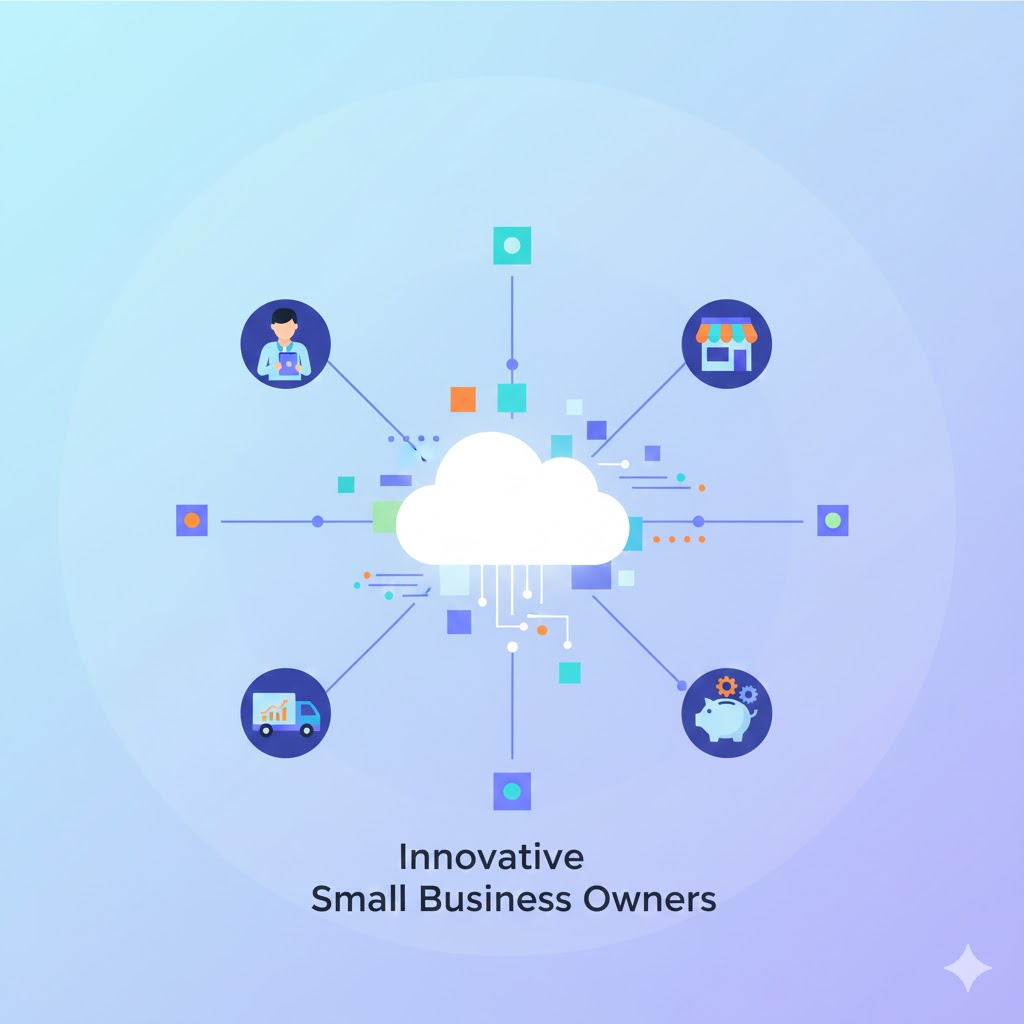
5 Cloud Services for Small Businesses to Thrive?
On the one hand, small businesses are constantly in search of a new solution to enhance productivity and stimulate growth in the modern busy digital world. The emergence of cloud services is one of the most revolutionary changes that took place in recent years. These services have a variety of tools that may be used to facilitate operations, save costs, and improve cooperation. This article examines the recent cloud services that have been specifically written to help small businesses and explains how it can transform the way you work.
Conceptualizing Cloud Services
Cloud services can be described as a range of computing services, which is offered through the internet. Businesses can also get access to software, storage and processing power remotely instead of using local servers or personal computers. This not only saves the cost of the costly infrastructure, but also offers flexibility and scalability, enabling the small business to respond to the changing demands swiftly.
Types of Cloud Services
Infrastructure as a Service (IaaS): IaaS is the offer of virtualized computing services on the internet. Small businesses have access to servers, storage and networking infrastructure on a rent basis, eliminating the initial purchase of the physical hardware.
Platform as a Service (PaaS): PaaS is the platform where the developers can create, test, and deploy applications without having to concern themselves with the underlying infrastructure. It is also helpful especially to the small businesses that are interested in creating their own software solutions.
Software as a Service (SaaS): SaaS provides software applications on the internet thus removing the process of installation and maintenance. Users can utilize applications such as customer relationship management (CRM), email and project management tools on any device that is connected to the internet.
The advantages of Cloud Services to Small Businesses.
Cloud services offer many benefits that can greatly be useful to small business owners. The following are some of the most convincing reasons to implement the use of cloud technology.
Cost-Effectiveness
Cost saving is one of the main benefits of cloud services. Old fashion IT infrastructure involves huge investment of hardware and software. Using cloud services, the business can pay as they consume, which can be either on a subscription basis, which helps in saving a lot of financial burden. This enables small businesses to invest their resources more productively by investing in expansion activities instead of having to maintain expensive hardware.
Enhanced Collaboration
Cloud services also enable team members to collaborate in real-time regardless of the physical location of the members. Applications, such as Google Workspace or Microsoft 365, allow employees to collaborate on a document in real time, share files effortlessly, and communicate with each other via built-in messaging and video conferencing. Such smooth teamwork will promote innovation and improve productivity, especially among remote work teams.
Scalability and Flexibility
With the development of small businesses, their needs change. Resource scaling that can be done to meet increased demand easily is available through the use of cloud services. Cloud providers can scale up or down your resources whenever you require more storage, more computing power, or new software applications. Such scalability guarantees the ability of the businesses to react swiftly to market dynamics without having to make long-term commitments to contracts and infrastructure.
Improved Security
Security is a high priority to owners of small businesses and more so sensitive information. Cloud service providers are spending a lot on security including encryption, firewalls and security updates. Using these services, small businesses will be able to improve data protection without the necessity to use a large number of in-house skills or resources.
Disaster Recovery and Backup
Information loss may be catastrophic to small companies. Cloud services provide automated backup systems, which means that important data is safe and can be accessed in the case of any disaster. This is the peace of mind that will enable the business owners to concentrate on their main operations since they know that their data is secure against any surprises that might occur.
New Cloud Services to be considered
Having known the advantages of cloud services, now we will discuss some innovative solutions that can be offered to the owners of small businesses.
1. Software on Accounting in the cloud
Financial management is a very important area of running a business. Financial management becomes easier with cloud based accounting software which automates invoicing, tracking expenses, and reporting like QuickBooks online or Xero. These tools enable the small business owners to view their financial information wherever they are and therefore they can easily make informed decisions.
2. Customer Relationship Manager Solutions
An effective CRM allows the organization to create and sustain customer relations. Cloud-based CRM services such as HubSpot and Salesforce offer customer interaction management tools, sales leads management tools, and customer data analysis tools. Through these platforms, small businesses are able to customize their marketing endeavors to enhance customer satisfaction.
3. Project Management Tools
Small businesses become successful through proper project management. Trello, Asana, and Monday.com are cloud based project management tools that assist a team in organizing tasks, deadlines and monitoring their progress. These tools will increase transparency and accountability as well as allow team members to work more effectively.
4. Cloud Storage Solutions
Any business needs safe storage of files. Scalable storage plans on cloud storage providers such as Dropbox, Google Drive, and OneDrive enable the small business to both store and retrieve their data across all devices. Sharing files with the members of the team and customers are also available in these services to facilitate the work process.
5. E-commerce Platforms
Any small business wishing to increase its range comes in handy cloud-based e-commerce sites such as Shopify and WooCommerce which make selling online easier. The sites offer all the tools required to establish and operate an online shop, including inventory control up to payment security, so small entrepreneurs can concentrate on marketing and communication.
Conclusion
The innovative cloud services can change the nature of operations among the owners of small businesses. The savings on costs and the increased cooperation associated with it, to the better security and scalability, the advantages are convincing. Using cloud technology, small companies are not only able to streamline their operations but also able to prepare to expand in a highly competitive environment.
When you think about implementing the use of cloud services into your business strategy, you should have an opportunity to review your particular needs and objectives. The tools required to succeed in the current digital and rapid world can be offered by the right cloud solutions.
FAQs (Frequently Asked Questions)
1. What are cloud services and how can they be utilized to benefit small businesses?
Cloud services offer computed services online and hence small businesses can access computing software, storage and processing power via the internet. Cost saving, improved collaboration, scalability, better security and disaster recovery solutions are benefits.
2. Are cloud services safe in the storage of sensitive business data?
True, some trusted cloud service providers dedicate a significant amount of money to security systems including encryption, firewalls, and frequent upgrades. This is usually more secure than small businesses are able to deliver using in-house solutions.
3. What is the use of cloud services in the collaboration between remote teams?
Cloud computing supports real-time working by providing the possibility to co-work on documents in real-time, communicate in chat and video, and share files without any difficulties, irrespective of the location.
4. What are the cloud services that ought to be considered by small businesses?
Cloud-based accounting software, customer relationship management (CRM) software, project management software, cloud storage, and e-commerce platforms should be viewed by small businesses as the means of optimizing their operations and achieving growth.
5. Do I have the ability to move my current software to the cloud?
A lot of cloud service companies have provided migration support to aid companies in moving their outdated software and data to the cloud. The migration needs to be strategized to reduce the disrupting factors and to guarantee the integrity of data.